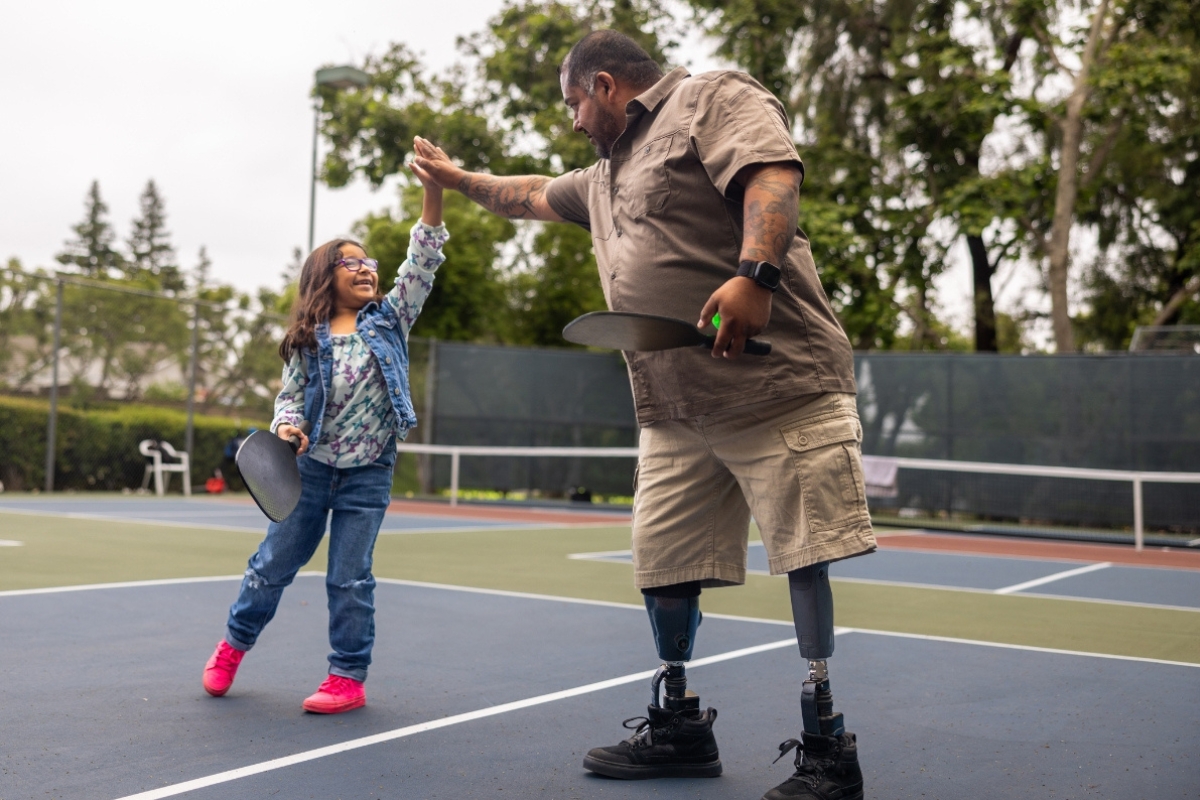
Prosthetic Care for Veterans: What Specialized Care Looks Like
For a veteran adjusting to life after limb loss, choosing a prosthetic provider is an important decision. A prosthesis is not simply a piece of equipment. It becomes part of your daily life, and the quality of the fit, alignment, components, education, and ongoing support can all affect how well it works for you.
That is why specialized prosthetic care for veterans starts with the person, not the device.
At Floyd Brace Company, we believe good prosthetic care means understanding your goals, listening to your questions, evaluating how your body is changing, and building a plan around your individual needs. Technology can be an important part of that process, but it should support the right solution rather than determine it.
Since 1942, Floyd Brace has provided custom orthotic and prosthetic care in South Carolina. Our approach is rooted in clinical knowledge, individualized care, craftsmanship, and long-term relationships with the people we serve.
What Is Specialized Prosthetic Care for Veterans?
Specialized prosthetic care is the process of evaluating a person's physical needs and goals, selecting appropriate prosthetic components, creating or fitting the prosthesis, and providing follow-up care as the person's needs change.
For veterans, that care may involve several stages:
An initial evaluation
Measurement and assessment of the residual limb
Range-of-motion and functional assessment
Discussion of daily activities and personal goals
Prosthetic component selection
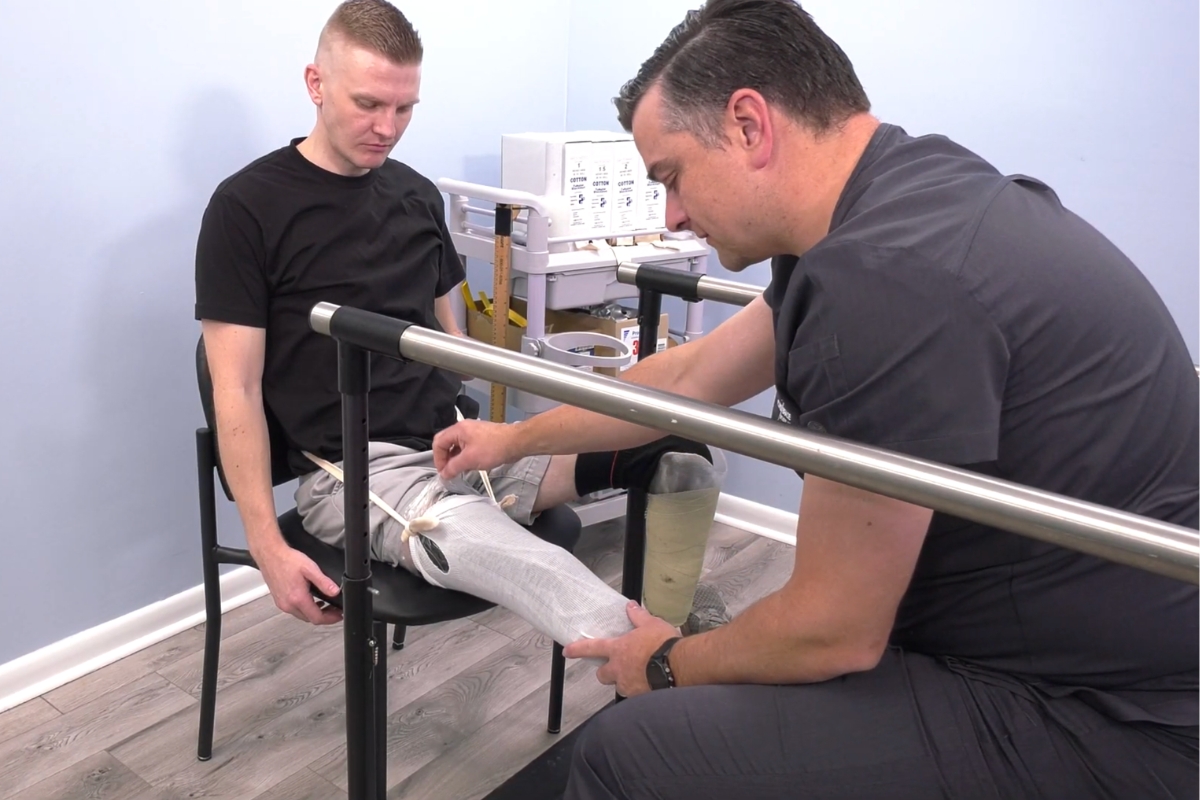
Casting and fitting when appropriate
Coordination with physical therapy and other healthcare providers
Follow-up appointments
Adjustments as the limb and mobility change
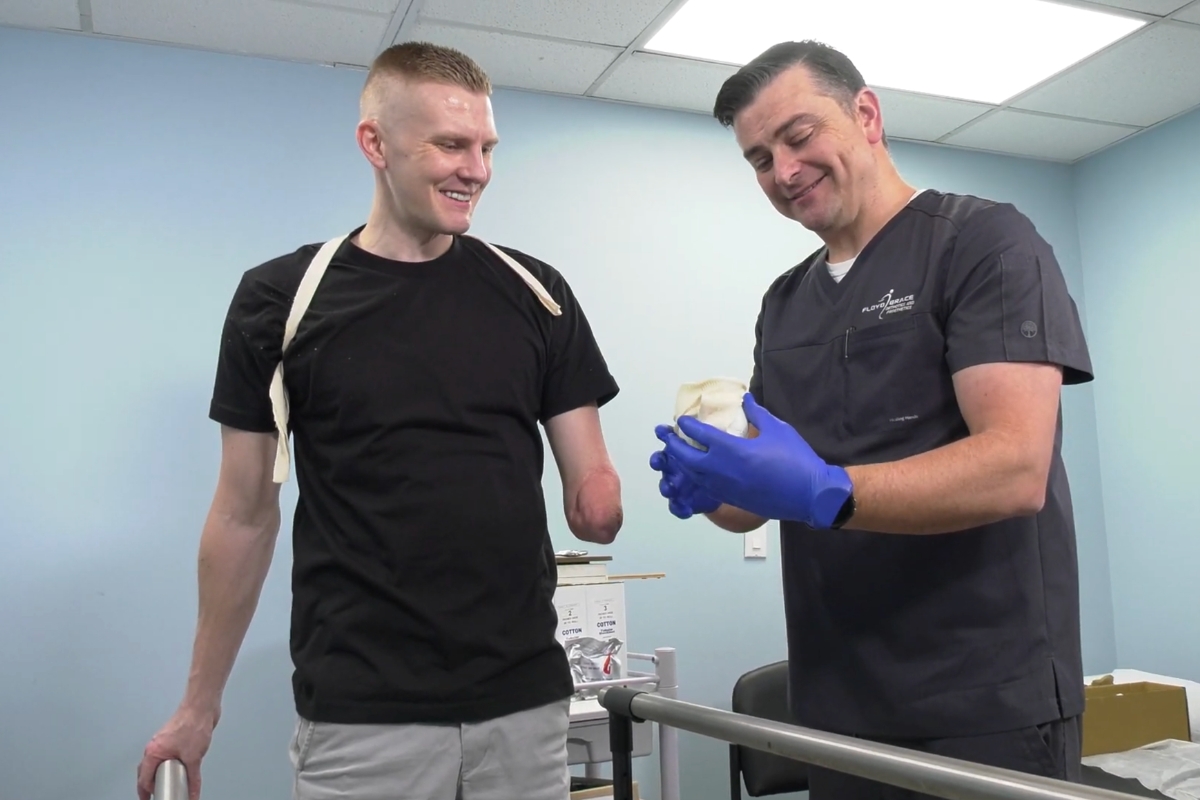
The Department of Veterans Affairs describes clinical orthotic and prosthetic services as including custom-fabricated and fitted devices such as artificial limbs, braces, and other mobility equipment. VA Prosthetic and Sensory Aids Service also works with an interdisciplinary team that can include prosthetists, orthotists, physicians, therapists, nurses, and podiatrists.
The important point is that specialized prosthetic care is an ongoing process. The goal is not simply to get a prosthesis. It is to make sure the solution continues to support the individual using it.
Why Prosthetic Care Needs to Be Individualized
There is no single prosthesis that is right for every veteran.
Two people with similar levels of amputation may have very different lifestyles, physical abilities, home environments, and rehabilitation needs. One person may want to return to work. Another may be focused on walking comfortably around the house and community. Someone else may want to participate in recreation or return to activities they enjoyed before limb loss.
Those differences influence the clinical decisions made throughout the prosthetic process.
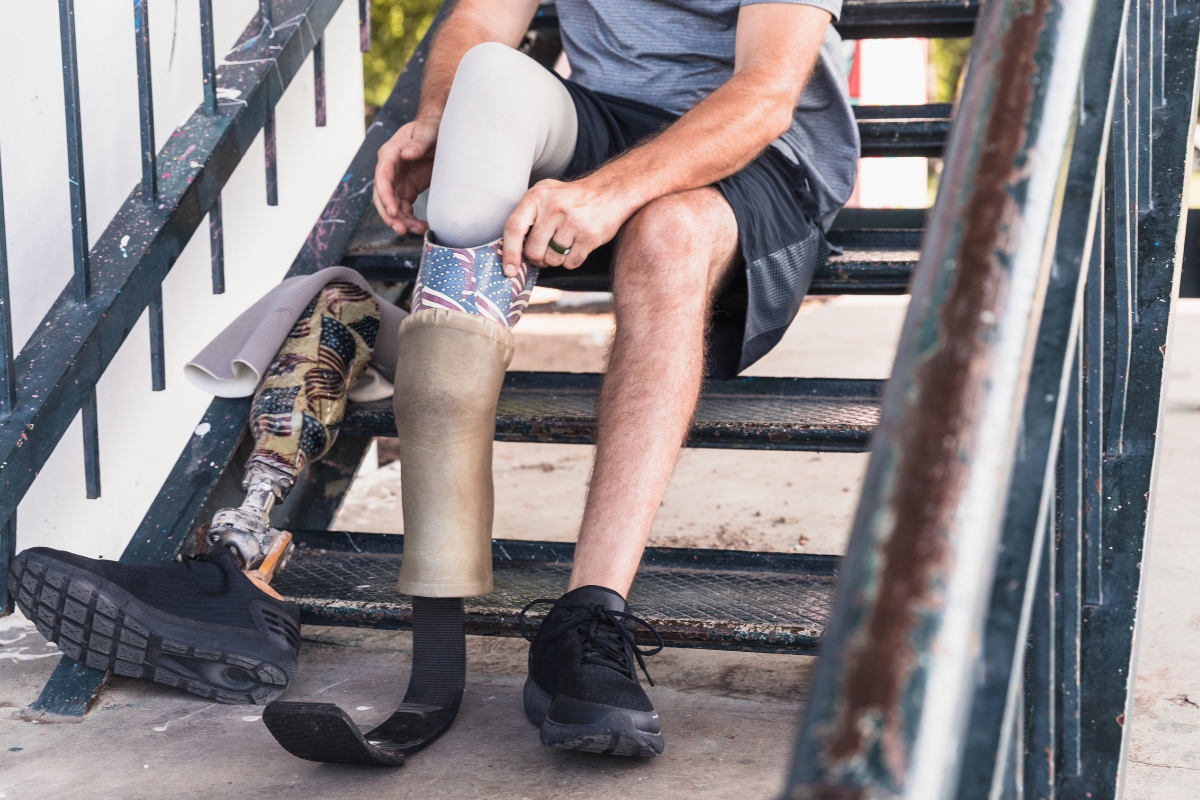
Your goals help guide component selection
Prosthetic technology can be complicated. There are different feet, knees, suspension systems, sockets, and other components to consider. It can be overwhelming, especially when you are trying to make decisions while adapting to a major life change.
A good clinical conversation starts by simplifying the choices.
Rather than beginning with a list of products, we begin by understanding how you plan to use the prosthesis. What does your typical day look like? What activities are difficult right now? Are there specific environments or tasks you want to manage more comfortably?
The answers help guide the clinical reasoning behind component selection.
The most advanced technology is not automatically the best choice for every person. The right solution is the one that fits the individual's abilities, daily demands, and circumstances.
What Happens During a First Prosthetic Appointment?
A first appointment is an opportunity for the prosthetic team to understand your current condition and determine what information is needed for the next stage of care.
If the amputation site has healed appropriately, an evaluation may include measuring the residual limb and taking a cast for fabrication or fitting. The clinician may also assess range of motion, strength, balance, and current mobility.
The appointment may also cover:
Questions or concerns about prosthetic care
Family or caregiver support
Current use of mobility aids
Daily activities and home environment
Previous rehabilitation experience
Any challenges affecting comfort or movement
Depending on the individual's situation, compression therapy may also be discussed or provided as part of preparing the residual limb for prosthetic care.
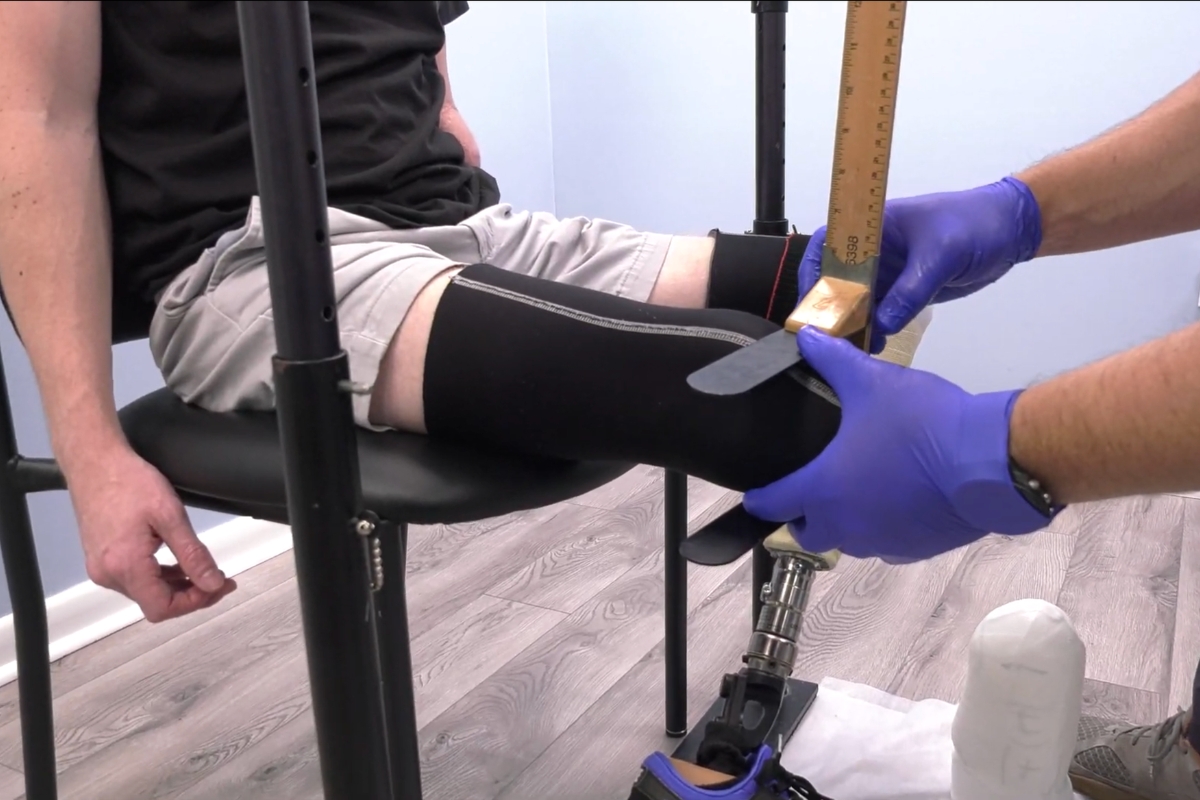
This evaluation helps the clinician understand the starting point and identify the next appropriate steps. It is not simply a measurement appointment; it establishes the clinical information needed to plan care specific to you.
Why Fit, Alignment, and Comfort Matter
A prosthesis has to work with your body and movement patterns. Fit and alignment can affect comfort, stability, and how efficiently you move.
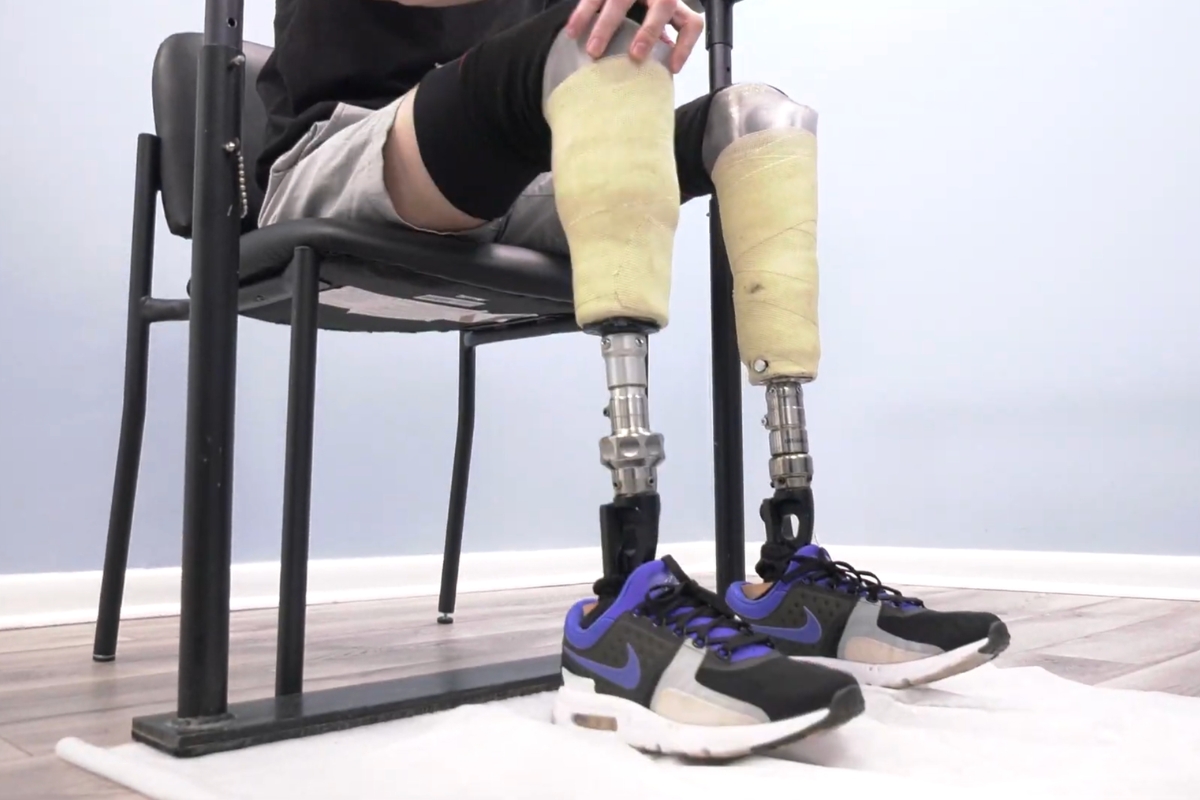
The residual limb may also change over time. Swelling, changes in limb shape, skin concerns, and differences in activity can all affect how a socket feels and functions. These changes may become especially noticeable as you begin using the prosthesis more regularly.
Your prosthetist can evaluate these concerns and determine whether an adjustment, additional education, or another intervention may be appropriate. Alignment may also be reviewed if your gait or functional abilities change, such as when you progress from a walker to a cane or begin walking without an assistive device.
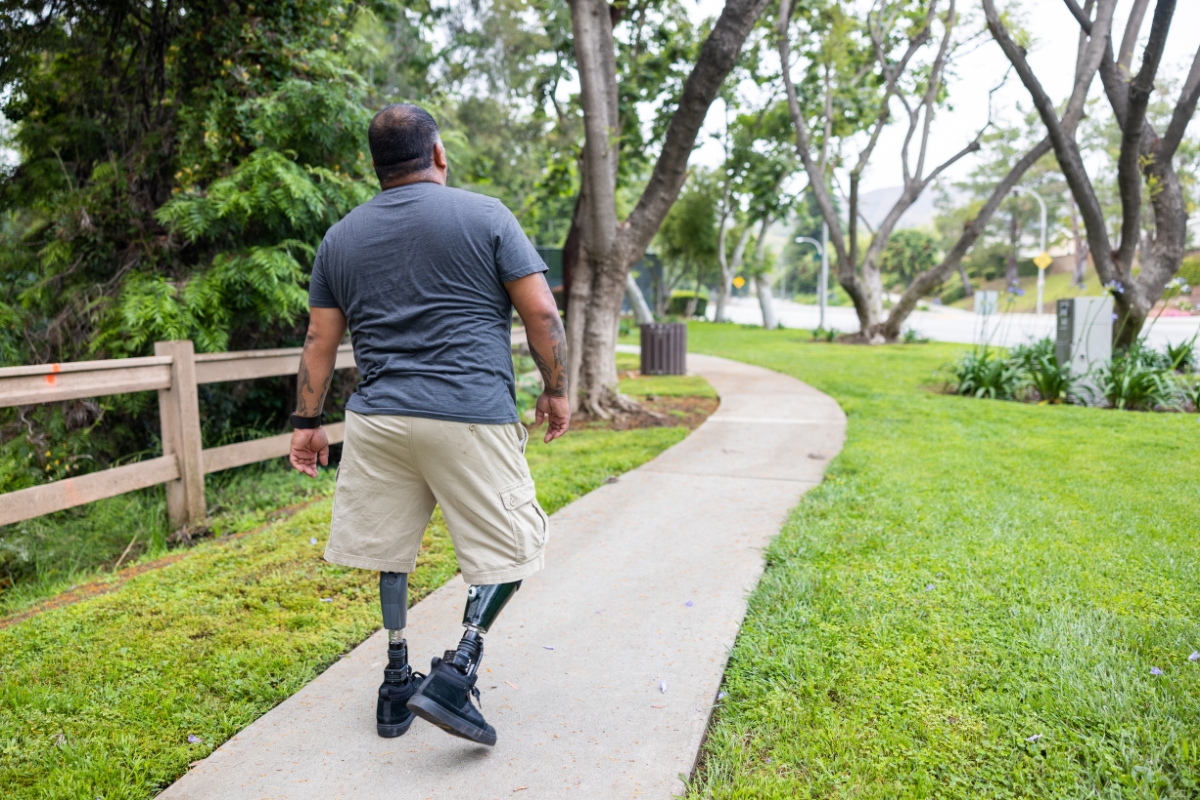
A comfortable, well-functioning prosthesis is not defined only by how it feels on the day it is delivered. It should be evaluated in the context of how you use it over time.
Why Ongoing Follow-Up Is Part of Good Prosthetic Care
A new prosthesis represents a significant step, but delivery is not necessarily the end of the process.
Follow-up appointments provide an opportunity to review how the prosthesis is performing in daily life and whether your care needs have changed. Your prosthetic team may discuss comfort, skin condition, mobility, maintenance, and any difficulties you are experiencing during specific activities.
This feedback is valuable because some concerns may not become apparent until you have used the prosthesis at home, at work, or in the community. It also allows your clinician to monitor your progress and coordinate with other members of your rehabilitation team when appropriate.
Continuity of care matters for the same reason. A long-term relationship with your O&P team allows the clinician to understand where you started, how you have progressed, and what support may be appropriate as your needs evolve.
How Prosthetic Care Works With Physical Therapy and Other Providers
Prosthetic care does not happen in isolation.
Physical therapists, physicians, occupational therapists, rehabilitation specialists, and other healthcare professionals may all play important roles in a veteran's recovery and mobility.
Communication between these professionals can help keep everyone working toward the same functional goals.
Education is part of that relationship, too. O&P clinicians can provide education and in-services to healthcare professionals about developments in prosthetic and orthotic care, helping referring providers stay informed about available approaches and technologies.
For referring physicians and therapists, a strong O&P relationship should work both ways. The prosthetic team should understand the patient's broader care plan, while the healthcare team should understand how the prosthesis is being fitted, adjusted, and used.
Choosing a Prosthetic Provider
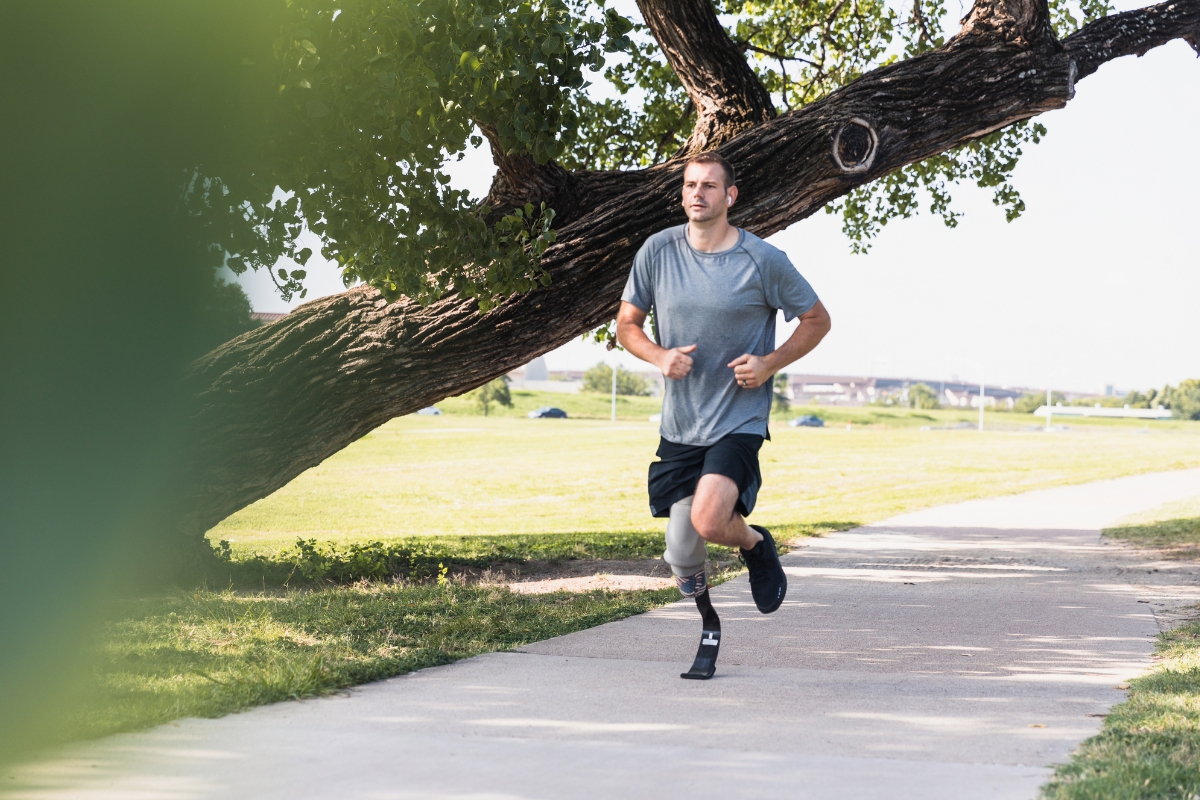
For veterans using VA benefits, location can understandably be an important consideration. VA programs may provide veterans with options for where prosthetic care is received, including care through VA facilities or, when applicable, a VA-approved and accredited community prosthetist.
Convenience matters. But it should not necessarily be the only factor.
One common mistake is choosing a provider simply because that clinic is the closest option. A clinic that is a little farther away may offer a different experience, clinical expertise, or approach that is a better fit for the individual.
When comparing providers, consider questions such as:
Will the clinician take time to understand my goals?
Will they explain why a particular solution is being considered?
Do they offer individualized prosthetic care?
What does follow-up care look like?
Will the same clinical team be involved in my care over time?
How does the provider communicate with my physician or therapy team?
Can they help me understand my options without overwhelming me with technology?
The best choice is not necessarily the closest clinic or the clinic offering the most technology. It is the provider whose approach fits your needs.
Questions Veterans Should Ask During a Prosthetic Evaluation
Coming to an appointment with questions can help you feel more prepared.
Here are several practical questions worth asking:
What options are available for my goals?
Ask your prosthetist to explain the options in plain language and why one approach may or may not make sense for you.
What happens as I become more mobile?
Ask how changes in your walking ability may affect fit or alignment.
What should I expect from follow-up care?
Understanding the role of adjustments can help set realistic expectations.
Are there options for activities involving water?
If you want to shower, swim, or participate in other water-related activities, ask whether a waterproof prosthetic option is appropriate for your situation.
What equipment may be available for my home?
The VA provides a range of prosthetic and rehabilitative equipment and services, but eligibility varies by program and individual circumstances. Ask your VA healthcare team what may be available to you.
Does a Veteran's Amputation Have to Be Service-Connected for VA Prosthetic Care?
This is an important question, and the answer is not simply "yes."
VA guidance states that general eligibility for prosthetic services and items is based on factors including enrollment in VA healthcare and medical need, while additional eligibility requirements can apply to specific programs.
VA information also specifically states that a prosthesis may be provided regardless of where or when an amputation occurred and whether the amputation is related to a service-connected condition or not.
Because individual eligibility, referrals, authorizations, and specific equipment programs can differ, Veterans should speak with their VA healthcare team or local Prosthetic and Sensory Aids Service for guidance about their circumstances.
When Should a Veteran Talk With a Prosthetist?
Consider discussing an O&P evaluation with your healthcare team when you are:
Preparing for your first prosthesis, even prior to amputation
Having difficulty with the fit of an existing prosthesis
Experiencing changes in your residual limb
Progressing to a new level of mobility
Considering a change in activity level
Having questions about available prosthetic options
Wondering whether your current prosthesis still meets your goals
Considering repair, replacement, or adjustments
These are general educational guidelines. The appropriate timing and treatment plan depend on an individual's clinical circumstances and should be determined with a qualified healthcare professional.
Prosthetic Care for Veterans Should Be About the Person, Not Just the Prosthesis
A prosthesis can be an important tool for restoring mobility, but the device is only one part of the process.
Specialized prosthetic care involves listening to the patient, understanding individual goals, evaluating the body and movement, making thoughtful component decisions, and continuing to refine the fit as needs change.
At Floyd Brace Company, that philosophy is central to how we approach O&P care. We combine clinical knowledge with individualized attention and a commitment to being there throughout the process.
For more than 80 years, South Carolinians have turned to Floyd Brace for orthotic and prosthetic care. Now at ten locations across the state, our goal remains simple: provide expert care and heartfelt support while helping each person move toward greater confidence and independence.
If you are a veteran exploring prosthetic options, or a healthcare provider helping a veteran navigate O&P care, we welcome the opportunity to help you understand the next step.
Have questions about prosthetic care? Contact Floyd Brace Company to start a conversation with our team.
