How Pediatric Prosthetics Change as Your Child Grows
Every parent knows the feeling of watching a child suddenly shoot up an inch over the summer. Sneakers don't fit, pants sit above the ankles, and you find yourself making another run to the store. But when your child uses a prosthesis, a growth spurt can bring a very different kind of anxiety: Are we going to have to start all over with a brand new device?
It is a completely natural question, but pediatric prosthetic care doesn't work like buying new shoes. A child’s prosthesis is not a static piece of equipment; it is an evolving, highly adaptable system designed to grow, adjust, and shift right alongside them. Unlike adult care, which typically focuses on maintaining stability, pediatric prosthetics is an ongoing, dynamic process. As your child grows taller, gains coordination, and takes on new challenges, from carpet crawling to playground sprints, their prosthetic needs naturally evolve too.
At Floyd Brace Company, we want families to feel informed and confident throughout this journey. Understanding how a device adapts over time, and knowing what to look for at home, helps ensure your child stays comfortable, active, and moving forward.
Adjustment vs. Replacement: What’s the Difference?
When parents notice their child getting taller, they often assume a full refitting is around the corner. In reality, pediatric prosthetists anticipate growth from the very beginning. Physical changes can frequently be managed through simple clinical modifications long before a full device replacement becomes necessary.
Understanding the difference between a routine clinical adjustment and a complete device replacement helps set realistic expectations for your appointments:
How Prosthetists Design Devices to "Grow"
A child's residual limb changes in two distinct ways over time: height (length) and volume (circumference). To accommodate both without needing a new prosthesis every few months, prosthetists rely on specialized components and clever design techniques:
Modular Pylon Lengthening: The pylon—the lightweight, high-strength tube connecting the prosthetic socket to the foot or knee joint—is modular. As your child grows taller, a prosthetist can lengthen or swap this tube in the clinic, preserving proper height, posture, and spinal alignment.
Volume Management with Sock Ply & Liners: A child’s limb naturally changes shape and thickness throughout the day and over the seasons. Adjusting the "ply" (thickness) of specialized prosthetic socks or modifying gel liners allows the device to maintain a snug, comfortable fit without squeezing sensitive tissue.
Growth-Friendly Socket Features: Modern prosthetic sockets are often built with flexible inner shells, pad inserts, or built-in relief zones inside a rigid outer frame. These features give the limb room to expand safely as your child grows, extending the useful life of the socket.
Growth Beyond the Tape Measure: The Developmental Journey
Physical growth is only one half of the equation. Children don't just get bigger; their goals expand. What a child needs from their prosthesis shifts dramatically as they navigate different developmental milestones.
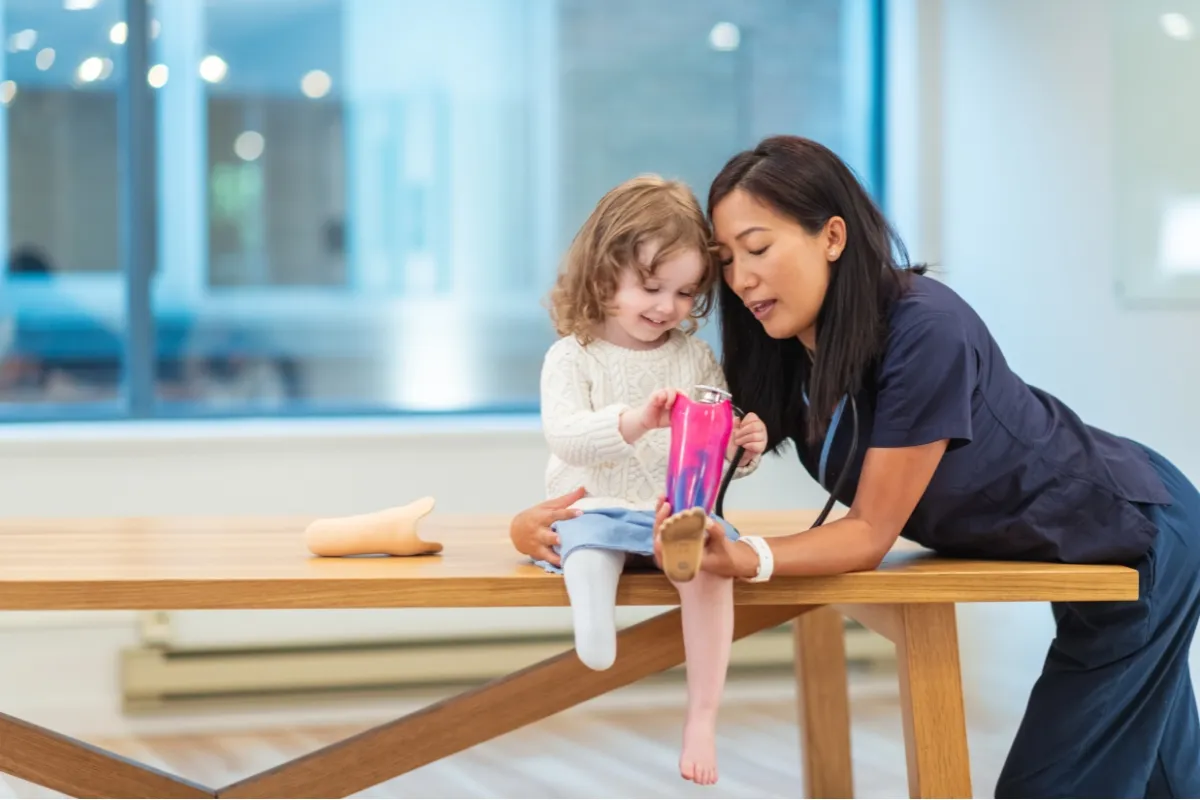
In early childhood, care centers around exploration and foundational movement. For a toddler, the prosthesis serves to encourage standing balance, weight-bearing, floor play, and body awareness. The goal at this stage is helping the child feel comfortable integrating the device into daily play and movement.
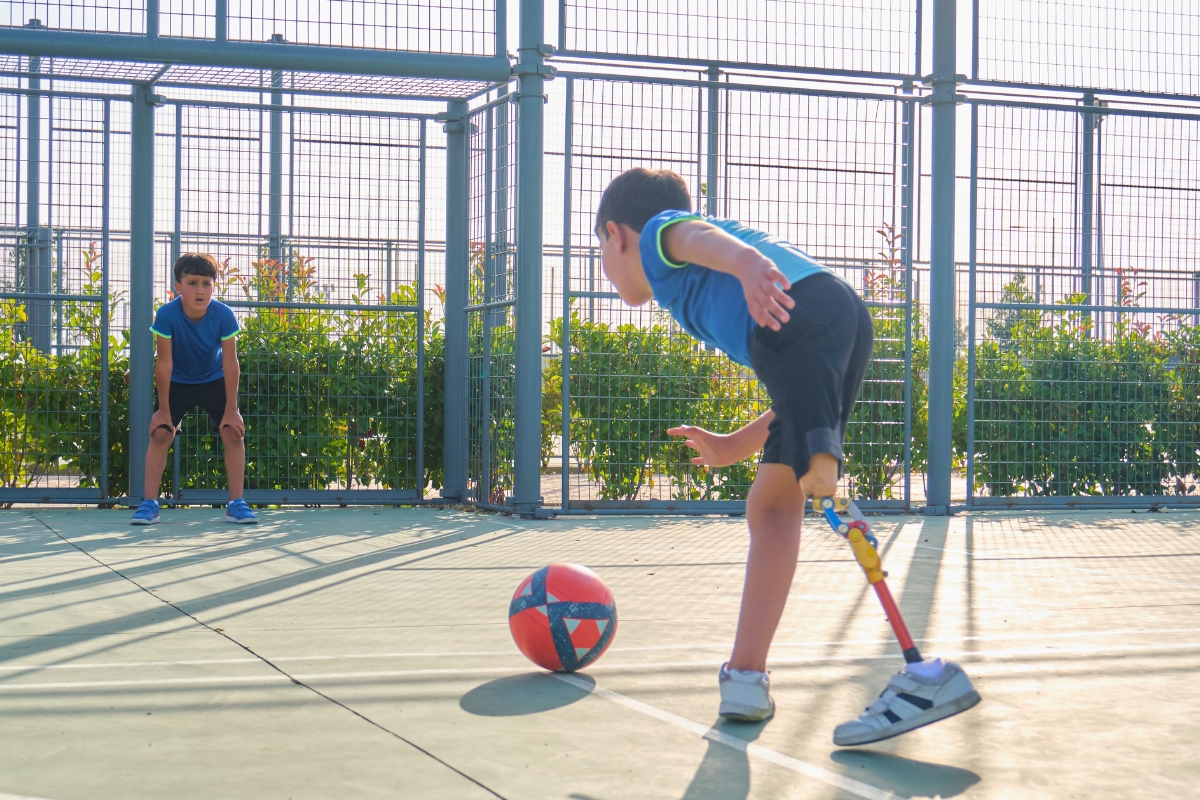
As children enter their school-age years, their world expands rapidly. Daily life suddenly involves navigating crowded classrooms, climbing stairs, running on playgrounds, and participating in PE class. Here, prosthetic decisions shift toward maximizing durability, impact absorption, and agility so the child can keep up with peers comfortably and safely.
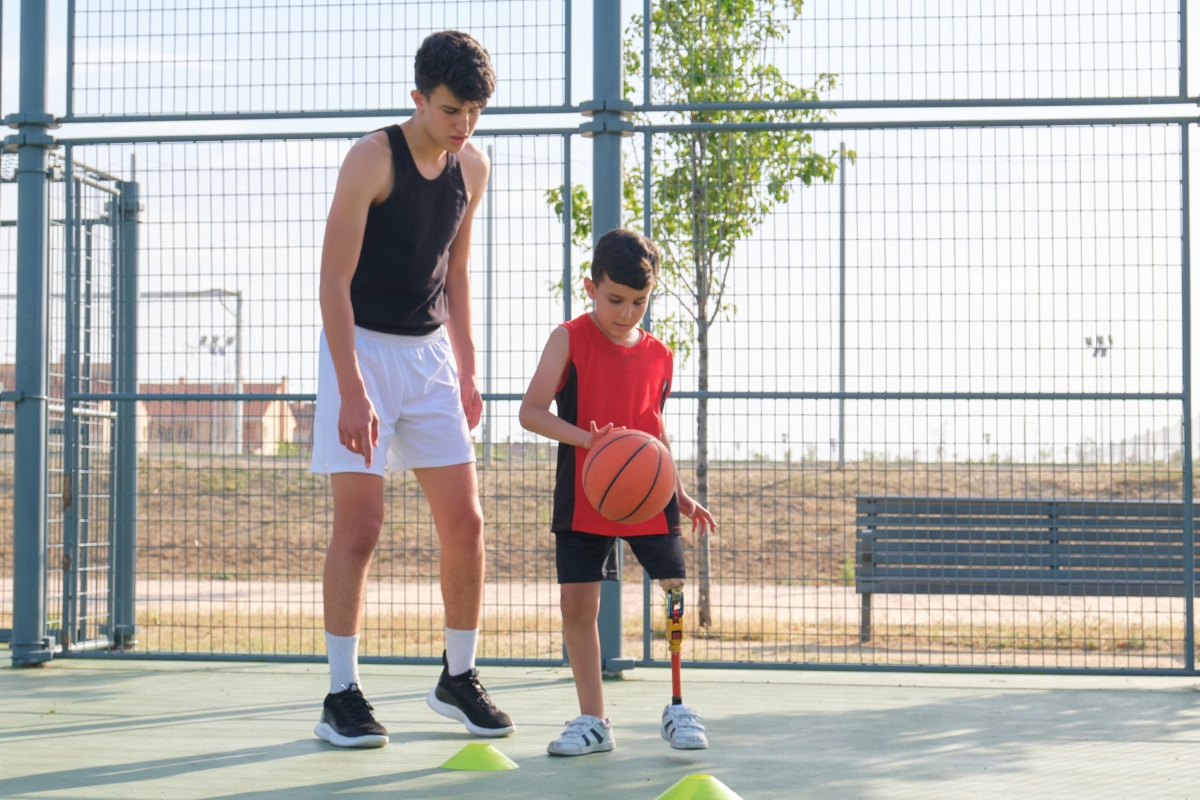
By adolescence, teens experience rapid growth spurts alongside evolving social dynamics and personal interests. At this stage, care becomes a true partnership. Teenagers take an increasingly active role in their clinic visits—speaking up about high-impact sports, daily comfort, visual choices, and their personal lifestyle goals.
What Parents Should Watch For: Key Indicators and Red Flags
Clinicians observe your child during appointments, but you see them in real life at the park, at the dinner table, and after a long day of school. Parents are almost always the first to notice when a prosthesis needs attention.
Rather than waiting for a device to stop working entirely, watch for these specific physical and behavioral cues:
The 20-Minute Redness Rule: Mild, temporary pinkness after activity can be normal. However, skin redness on the residual limb that stays visible longer than 15 to 20 minutes after removing the device points to a pressure spot that requires clinical adjustment.
Skin Changes or Discomfort: Any sign of chafing, blisters, open sores, or deep pressure indentations should be evaluated right away.
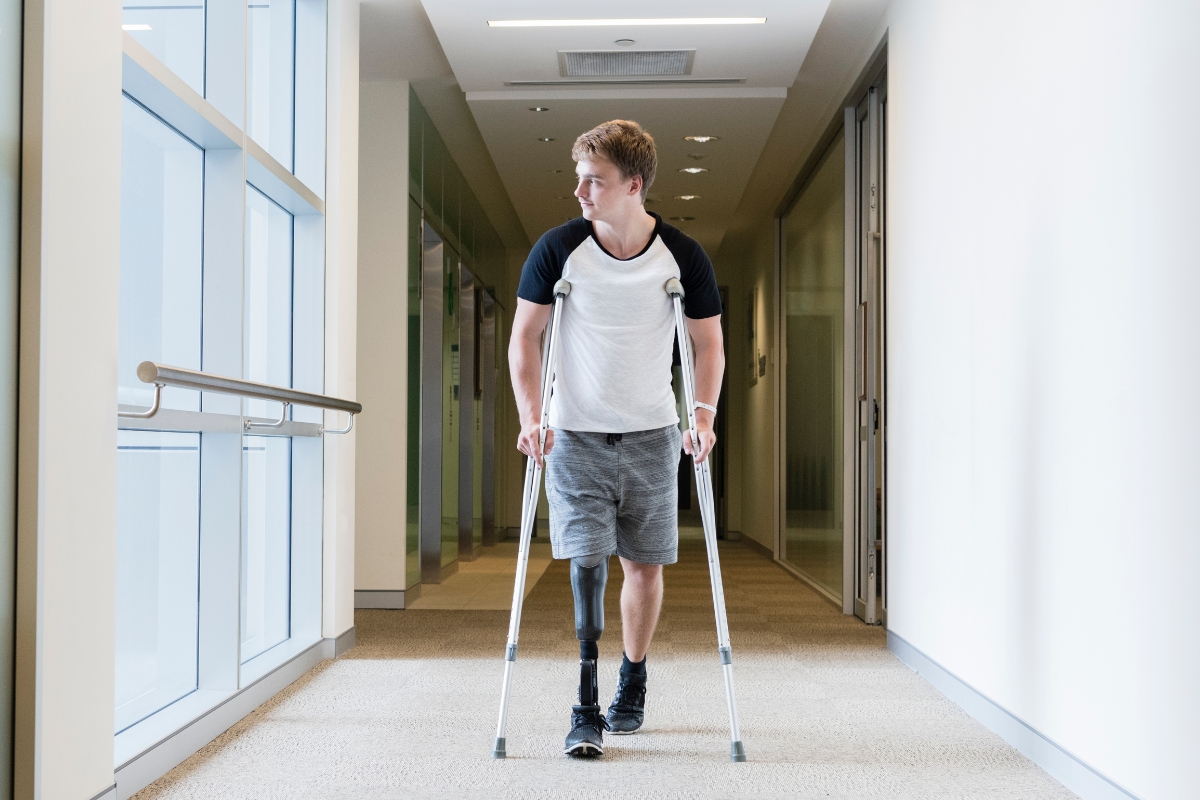
Compensatory Gait Shifts: Pay attention to how your child walks or runs. Sudden subtle changes—such as "vaulting" (hopping up onto the toes of the uninjured leg to swing the prosthesis forward) or "circumduction" (swinging the prosthetic leg outward in a wide arc)—are often silent compensations for a socket that feels tight, loose, or misaligned.
Behavioral Changes: If a child who usually loves playing outside suddenly wants to take their prosthesis off early, resists putting it on in the morning, or sits out during favorite activities, hidden discomfort is frequently the reason.
Difficulty Donning or Component Wear: If putting on the socket becomes unusually tight or difficult, or if you notice unusual clicking, squeaking, or heavy tread wear on the prosthetic foot, it's time for a check-up.
A Partnership in Care
When parents, clinicians, and therapists share observations, children thrive. Your everyday insights about how your child plays, sits, and moves at home give the clinical team the real-world context needed to make precise adjustments.
Pediatric care ought to be rooted in this spirit of family partnership. We work closely alongside parents, pediatricians, physical therapists, and occupational therapists to ensure that every modification aligns with your child's overall growth and therapy plan.
Since 1942, Floyd Brace has provided compassionate, individualized orthotic and prosthetic care across South Carolina. Our priority is making sure your child’s prosthesis remains an empowering tool that supports their confidence, independence, and active life every step of the way.
Frequently Asked Questions
How often does a child need a new prosthesis?
There is no fixed calendar schedule. Timing depends on individual growth rate, socket fit, activity level, and clinical need. Many children use the same primary socket for 1 to 2 years with routine clinical adjustments, while others going through rapid growth spurts may require a new socket sooner.
Can a prosthetic socket be modified without making a brand-new device?
Yes. Prosthetists can often modify internal pad placement, heat-adjust flexible socket materials, or alter sock ply count to relieve pressure points and accommodate moderate growth without replacing the entire device.
What should I do if my child complains of pain during activity?
Have your child remove the device and check their skin. Look for persistent redness using the 20-minute rule. If discomfort recurs or skin irritation is present, schedule an appointment with your prosthetist to evaluate the socket fit and alignment.
Does every active child need a specialized sports prosthesis?
Not necessarily. Most modern daily pediatric prostheses are designed to handle routine playground games, running, and school sports. Specialized devices—such as running blades or swimming prostheses—are evaluated individually based on specific athletic goals and interests.
Moving Forward Together
A child’s prosthetic journey is not a straight line—it includes quick growth spurts, exciting milestones, and occasional tune-ups along the way. Having an experienced, attentive care team makes all the difference in keeping that journey smooth.
If you have questions about how your child’s prosthesis is fitting, or if you've noticed changes in their movement or comfort, the Floyd Brace team is here to help. Reach out to us today to schedule a check-up with one of our pediatric O&P specialists.
Clinical Note: Specific statements regarding clinical adjustment protocols, replacement intervals, skin checks, or component selection should be reviewed with your child's attending prosthetist and healthcare team. Treatment plans and device modifications are individualized based on clinical necessity.
