
Helping Your Child Build Confidence With a Prosthesis
Hearing that your child will need a prosthesis brings up a whirlwind of emotions. It is completely normal to feel overwhelmed, protective, and unsure of what comes next. At Floyd Brace, we understand that a prosthesis is more than just a medical device; it’s a tool to help your child play, explore, and thrive.
With compassionate guidance and a structured approach, you can help your child embrace their new device with confidence and enthusiasm.
Understanding Your Child’s Prosthetic Journey
Every child’s story is unique. Whether your child was born with a limb difference or is adapting to a prosthesis following a sudden trauma or accident, this transition impacts their whole world.
While a prosthesis restores physical function, its true success lies in emotional development. As a parent, you might worry about their self-image, how they will handle therapy, or how others will treat them. We are here to guide you through every step, turning uncertainty into clarity, reassurance, and hope.

How to Introduce the Prosthesis Early
One of the most important steps is introducing the concept of the device before the fitting even happens. This reduces fear and builds curiosity.
Keep it simple: Use age-appropriate language. Try saying, “This is a special arm that helps you build blocks,” or “This is a cool new leg to help you run.”
Normalize it through play: Show pictures, videos, or even toy prosthetics. Encourage pretend play so your child sees the device as a fun tool rather than something intimidating.
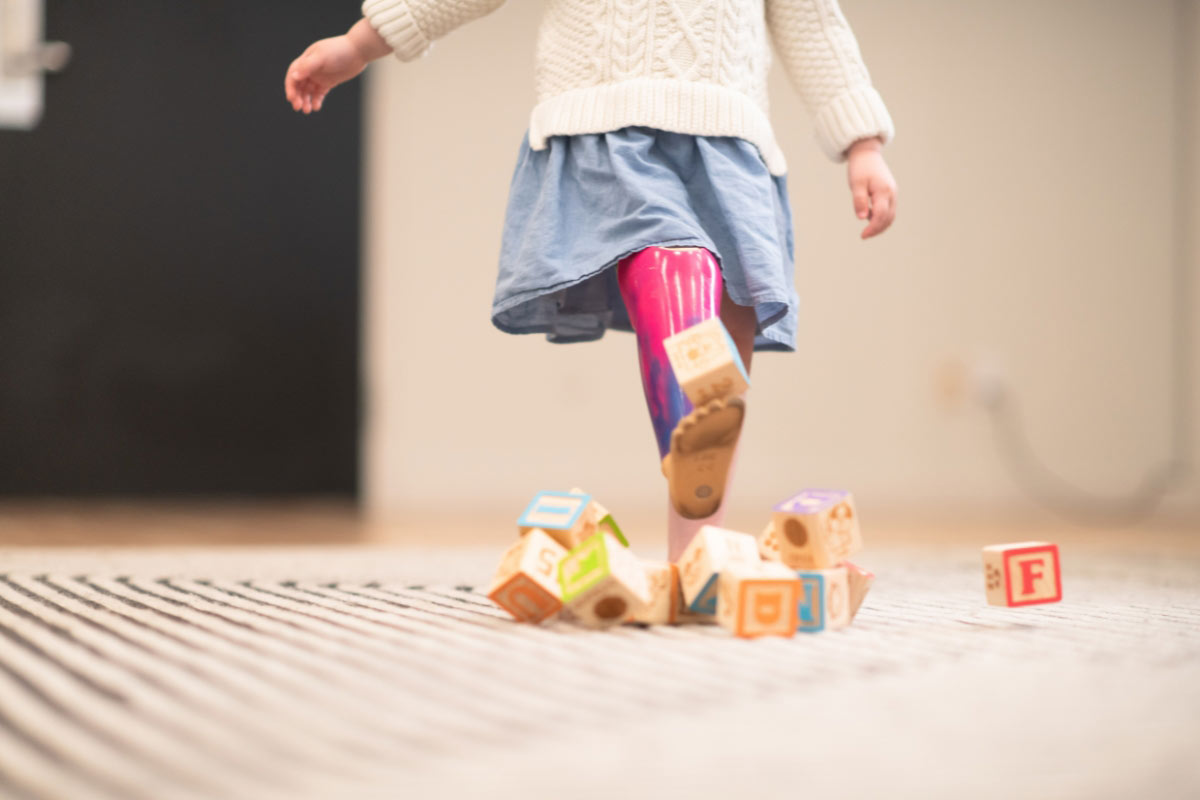
Let them choose the look: This is where you can lean into the "cool factor." Whether it’s their favorite color, a superhero logo, or a bright pattern, letting your child design their device turns a medical necessity into an expression of their personality.
Actionable Steps for Building Child Confidence With a Prosthesis
Helping your child embrace their prosthesis is a journey. Here are proven steps to build their skills and self-esteem.
Start small and celebrate often: When the device arrives, introduce it in a familiar, low-pressure environment. Break tasks into small steps, like wearing it for just 15 minutes or picking up a single toy. Celebrate every tiny victory.
Make therapy a game: Physical therapy doesn't have to feel like work. By turning coordination exercises into a game of catch or an obstacle course, your child builds vital muscle memory without losing their sense of play.
Encourage everyday independence: Let them use the device to dress themselves, eat, and play. Every independent action, no matter how small, fosters immense pride.
Want more practical tips and physical therapy games you can play at home? Download our Pediatric Prosthetics Handbook for a comprehensive guide to your child's developmental milestones, troubleshooting tips, and daily care.
Navigating the "Everyday After": Handling Stares and Questions
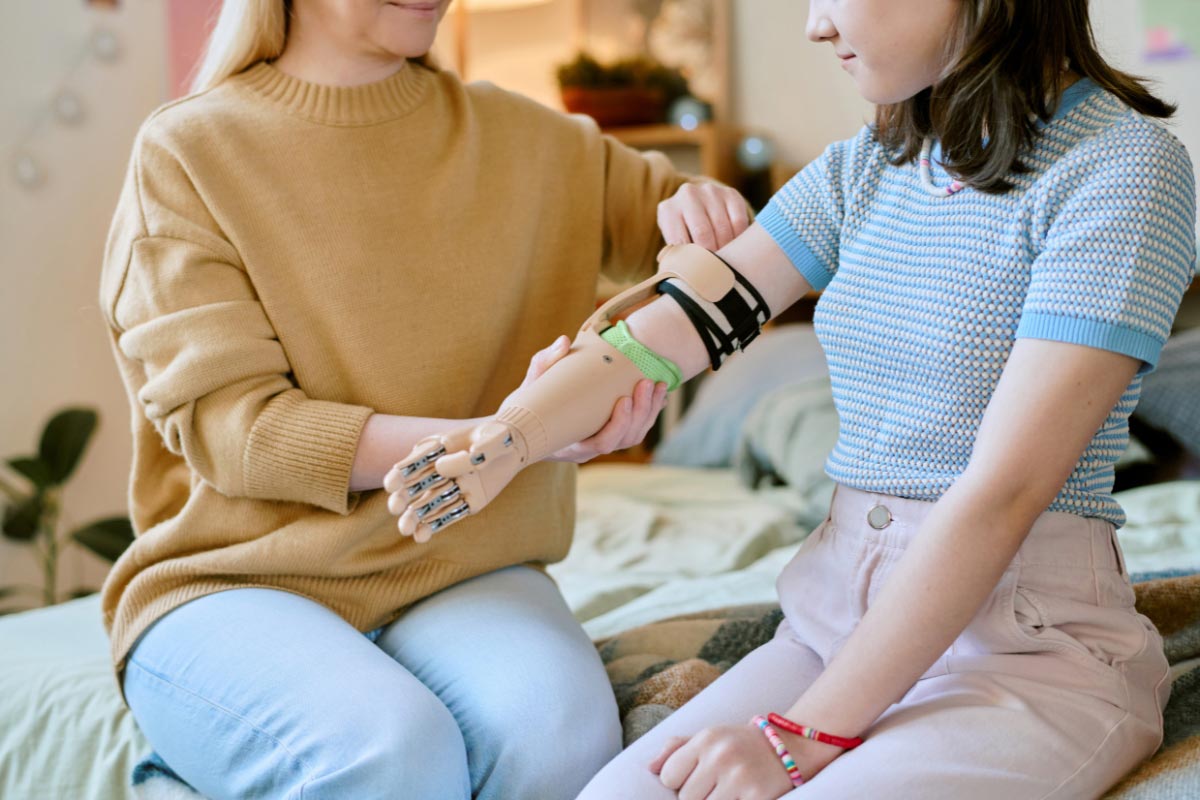
The "everyday after" is where parents often feel the most anxiety, especially on the playground or the first day back at school. Kids are naturally curious, and your child will inevitably be asked questions.
Arming your child with simple scripts builds incredible confidence and allows them to take control of the narrative. Practice these responses at home so they feel empowered:
The Factual Approach: "I was born with a little arm, so I use this helper arm to play."
The Trauma/Accident Approach: "I was in an accident and my leg got hurt, so the doctors gave me this robot leg to help me run fast."
The Superpower Approach: "It's my superhero leg! Want to see how fast I can go?"

The Floyd Brace Partnership
At Floyd Brace, we provide more than fittings. We offer a full partnership for children and families. Our board-certified clinicians specialize in pediatric care, combining technical expertise with deep empathy.
Continuity of care: You work with the same clinicians at each visit, building genuine trust and understanding.
Support for milestones: From their first steps to their first sports activities, we celebrate every achievement alongside your child.
Quick Tips for Caregivers
Validate their feelings: Allow your child to express frustrations or fears without judgment. Reframe mistakes as opportunities to grow.
Be patient: Let your child adjust at their own pace. Consistency is key.
Advocate: Keep lines of communication open with schools, therapists, and clinicians to ensure your child has an inclusive environment where they can thrive.
Introducing a prosthesis is a journey of physical adaptation and emotional growth. With early exposure, playful skill-building, and strong social support, your child won't just adapt, they will thrive. At Floyd Brace, we are committed to guiding your family every step of the way.
Take the next step: Meet our pediatric team or schedule a consultation today to start helping your child build lifelong confidence.

