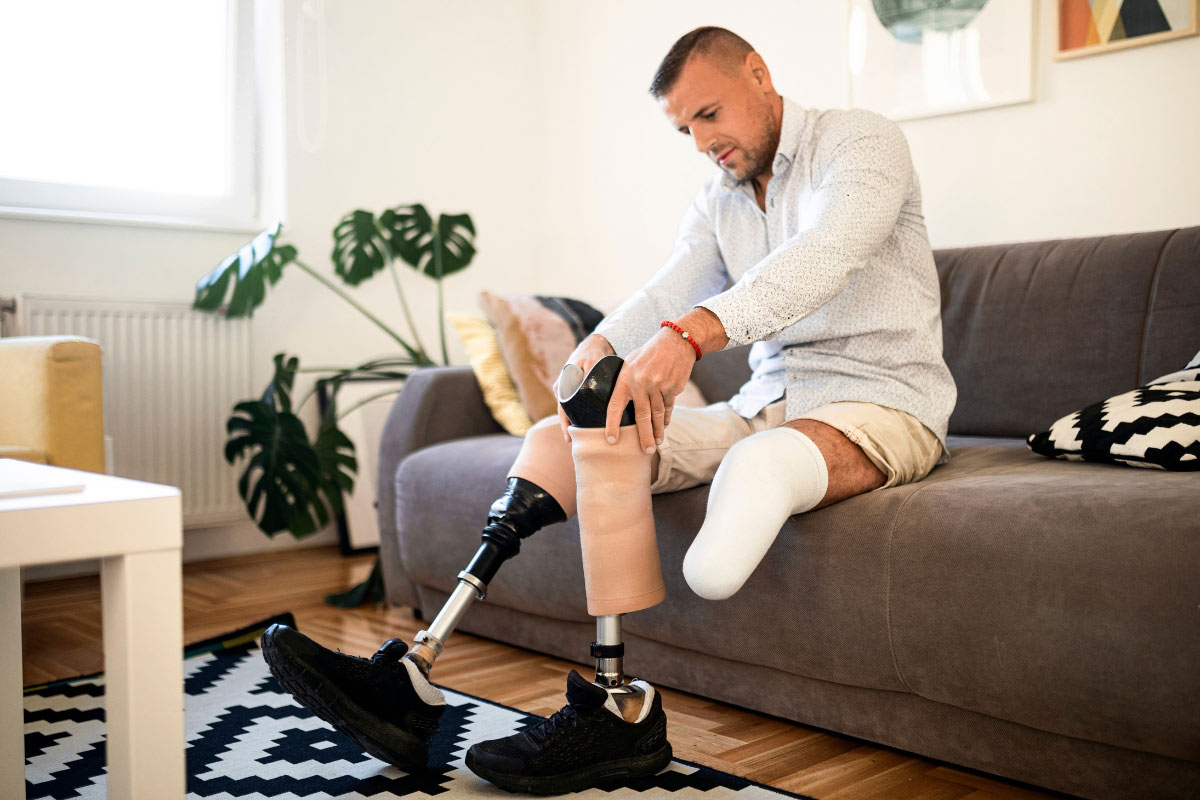
Above-Knee vs Below-Knee Prosthetics: Functional Differences Explained
Above-Knee vs Below-Knee Prosthetics: Functional Differences Explained
Losing a limb is life-changing, and choosing the right prosthetic is critical to restoring mobility, independence, and confidence. If you or a loved one are exploring prosthetic options, understanding the differences between above-knee (AK) and below-knee (BK) prosthetics can help guide your journey.
This guide explains what each type is, who they’re for, and how they function, with the goal of helping you make an informed decision about your mobility.
What Is a Prosthesis?
A prosthesis is a custom-made device designed to replace a missing limb. For lower-limb amputees, prosthetics restore the ability to walk, stand, and perform daily activities. While all prosthetics aim to improve mobility, the type you need depends largely on the level of amputation and your activity goals. Your prosthetist will ensure that the prosthetic is tailored not just to your body, but to your daily life, so you can regain independence confidently.

Above-Knee Prosthetics (AK)
Definition

An above-knee prosthesis, also known as a transfemoral prosthesis, replaces a leg above the knee, including the knee joint itself. Since the natural knee is no longer present, an artificial knee joint is incorporated to allow bending and support weight during walking and other activities. This type of prosthesis is highly customizable, with options ranging from mechanical joints to advanced microprocessor knees that adjust resistance automatically based on movement and terrain.
Who It’s For
Above-knee prosthetics are suited for people with thigh-level amputations from trauma, disease, or congenital conditions. They are also appropriate for pediatric cases involving femoral deficiencies and those with a knee disarticulation amputation. Because these prosthetics restore the knee function, they are often chosen by individuals seeking greater mobility, whether walking around the house, returning to work, or resuming more active lifestyles like jogging or playing sports.
Functionality
The artificial knee allows controlled flexion and extension, while the socket, pylon, and foot work together to provide balance and energy return. Using an AK prosthesis requires a bit more effort and training than below-knee devices, but with the right fit and guidance, patients can achieve functional independence, climb stairs, and participate in recreational activities safely.
Below-Knee Prosthetics (BK)
Definition
A below-knee prosthesis, also known as a transtibial prosthesis, replaces the leg below the knee, preserving the natural knee joint. By maintaining the knee, these prosthetics allow more natural movement, easier balance, and quicker adaptation for most users. They are also highly customizable, with options like energy-storing feet for more efficient walking or light jogging.

Who It’s For
Below-knee prosthetics are ideal for those with transtibial amputations caused by trauma, surgery, or disease. They may also be used for those with a Syme's amputation that removes the foot at the ankle joint but preserves the heel to provide a natural weight-bearing surface. Many users choose BK devices for their natural gait and lower energy requirements, which makes everyday walking and daily activities feel easier and more comfortable.
Functionality
With a BK prosthesis, the natural knee does most of the work, reducing physical strain and allowing quicker rehabilitation. Users often experience a more natural walking pattern and can return to many daily and recreational activities with confidence. Even for those with health concerns like diabetes or joint issues, a well-fitted BK prosthesis provides stability and support, helping to reduce the risk of falls.
Key Differences Between AK and BK Prosthetics
Above-knee prosthetics replace the knee and require more energy to use, whereas below-knee prosthetics preserve the natural knee and are more energy-efficient. AK prosthetics generally take longer to adapt to but allow controlled gait and advanced mobility with modern microprocessor joints. BK prosthetics provide a more natural walking experience and faster adaptation. Your prosthetist will consider your level of amputation, activity goals, and overall health to recommend the best option for you.
Choosing the Right Prosthesis
For many people, the type of prosthesis they receive, above-knee or below-knee, is determined primarily by the level of their amputation or underlying medical condition. While some patients may have a degree of choice in surgical or limb-salvage decisions, most adults do not have the option to select between an AK or BK prosthesis, because the anatomy of their residual limb dictates which device is appropriate. Understanding this can help set realistic expectations and focus attention on what truly matters: finding a prosthetic solution that fits well, restores mobility, and supports your goals for independence and daily life.

For a smaller group of patients, medical circumstances may allow for more than one prosthetic approach. When that choice exists, several important factors help guide the decision toward the most appropriate and functional solution
Amputation level: Your prosthetist will assess the residual limb carefully to determine whether an AK or BK prosthesis is most appropriate. Above-knee prosthetics replace the knee and require more training and energy to walk, while below-knee prosthetics preserve the natural knee, making walking feel more natural and reducing fatigue. The right fit can dramatically improve comfort and mobility.
Activity level: Think about how you want to move in your daily life. Some people want to walk safely around the house, while others hope to hike, jog, or play sports. Advanced AK prosthetics with microprocessor knees can help users regain high-function mobility, but they require commitment and training. BK prosthetics allow for quicker adaptation and energy-efficient walking, which can be ideal if you value natural movement and ease.
Age and health: Your overall health plays a big role in prosthetic choice. Seniors or patients with conditions like diabetes, neuropathy, or arthritis may benefit from devices that reduce energy demands and maximize stability. Younger or highly active individuals may prioritize advanced joint technology to support a more demanding lifestyle. A prosthetist can guide you to a solution that balances safety, comfort, and activity goals.
Goals and lifestyle: Beyond walking, consider what you want your prosthesis to help you achieve. Returning to work, gardening, attending social events, or running with your children are all valid goals. By understanding what matters most to you, your prosthetist can recommend a prosthetic that supports your lifestyle while also considering long-term care, adjustments, and comfort.
Selecting a prosthesis is about regaining independence, confidence, and quality of life. Your prosthetist is there to guide you every step of the way, answering questions, making adjustments, and ensuring the prosthetic fits both your body and your daily routine.
Take the Next Step With Floyd Brace
At Floyd Brace Company, our board-certified prosthetists have been helping South Carolinians regain mobility since 1942. Whether you need an above-knee or below-knee prosthesis, we provide custom devices, precise fittings, and ongoing support to help you walk, run, and thrive again.
Schedule your in-clinic consultation today and take the first step toward greater independence.

